News
EPJ PV Highlight - Advanced TOPCon solar cells with patterned p-type poly-Si fingers on the front side and vanishing metal induced recombination losses
- Details
- Published on 04 July 2025
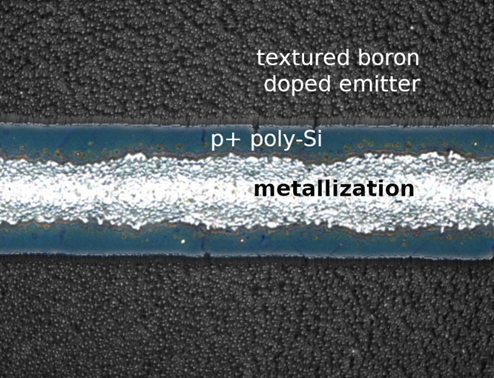
Advanced TOPCon solar cells with patterned p-type poly-Si fingers on the front side and vanishing metal induced recombination losses
TOPCon solar cells have rapidly become the new industrial standard in solar cell production, highlighting the benefits of applying a contact passivation scheme based on a thin interfacial oxide and a highly doped polycrystalline silicon (poly-Si) layer. Additionally, the introduction of the laser-enhanced contact passivation (LECO) process has brought significant gains in efficiency by further improving contact and surface passivation. Additionally, it allows reducing the poly-Si layer thickness and eliminates the need for aluminum containing metal pastes that have been associated with certain solar cell degradation mechanisms.
EPJ H Highlight - Lev Strum: A forgotten physicist who predicted the foundations of tachyon theory
- Details
- Published on 27 June 2025
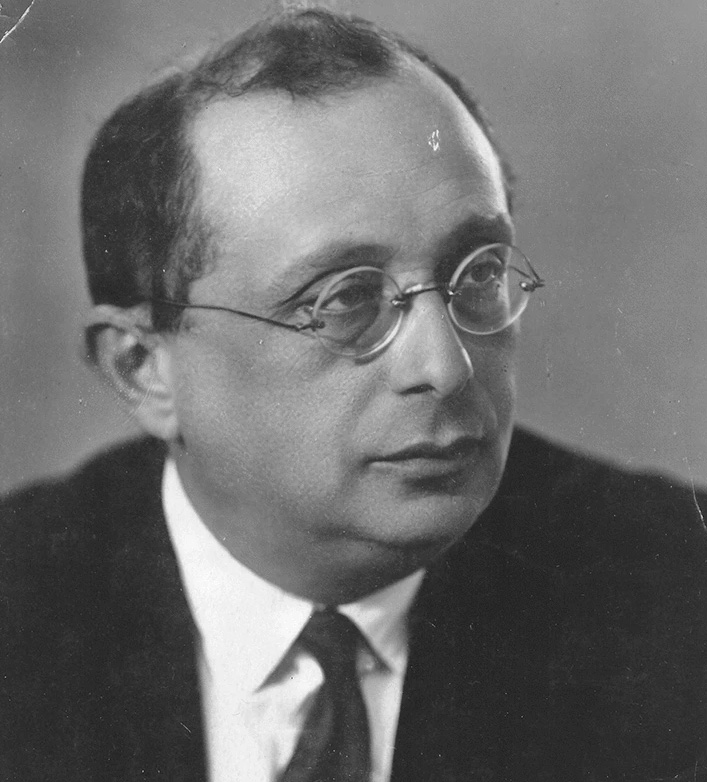
A new paper reviews the life and career of Lev Strum: a little-known physicist who faced a tragic fate, and whose ideas about faster-than-light travel were revived decades later with the emergence of tachyon theory.
Ever since Einstein developed his theory of Special Relativity in 1905, physicists have widely accepted that no particle or information-carrying signal can ever travel faster than the speed of light in a vacuum. Following Einstein’s theory, however, the idea persisted that faster-than-light motions could still be possible in some cases. By far the most well-known revival of this idea was the emergence of tachyon theory in the 1960s.
Decades earlier, however, many of the most important elements of tachyon theory were also proposed by Lev Strum: a Ukrainian-Jewish physicist who ultimately faced a tragic fate, and whose name has been almost entirely forgotten. Through a new study published in EPJ H: Historical Perspectives on Contemporary Physics, Helge Kragh at the University of Copenhagen reviews the ideas proposed by Strum, and presents a biography of his life and scientific career.
EPJ D Highlight - Bound and virtual states in low-energy electron and positron scattering
- Details
- Published on 27 June 2025
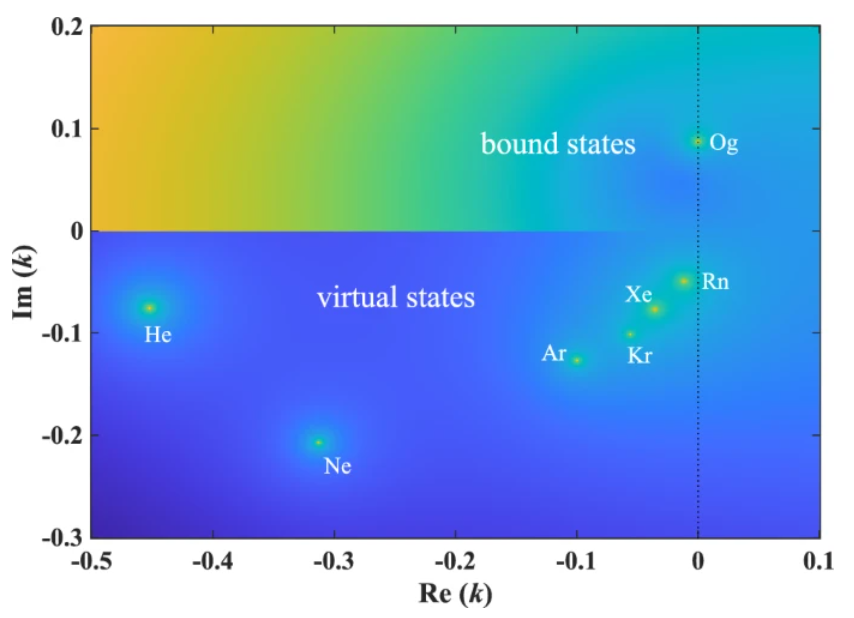
New mathematical approach confirms that low-energy charged particles can briefly bind to atoms or molecules
So far, it has remained an open question whether moving charged particles can briefly form bound states with neutral atoms and molecules. In previous experiments, researchers observed enhanced positron annihilation at energies corresponding to specific vibrational modes in neutral molecules, which they interpreted as evidence that the positrons were briefly bound. Until now, however, this interpretation has not yet been corroborated through other scattering observables.
Through new research published in EPJ D, Kamil Fedus and Grzegorz Karwasz at Nicolaus Copernicus University, Poland, present a new method for estimating the energies of both bound and virtual states of low-energy charged particles from elastic scattering cross-sections. Their approach confirms previous theoretical predictions about the formation of bound and virtual states during the scattering of these particles—helping physicists better understand how the scattering process unfolds.
EPJ B Highlight - Predicting adsorption with quantum indicators
- Details
- Published on 27 June 2025
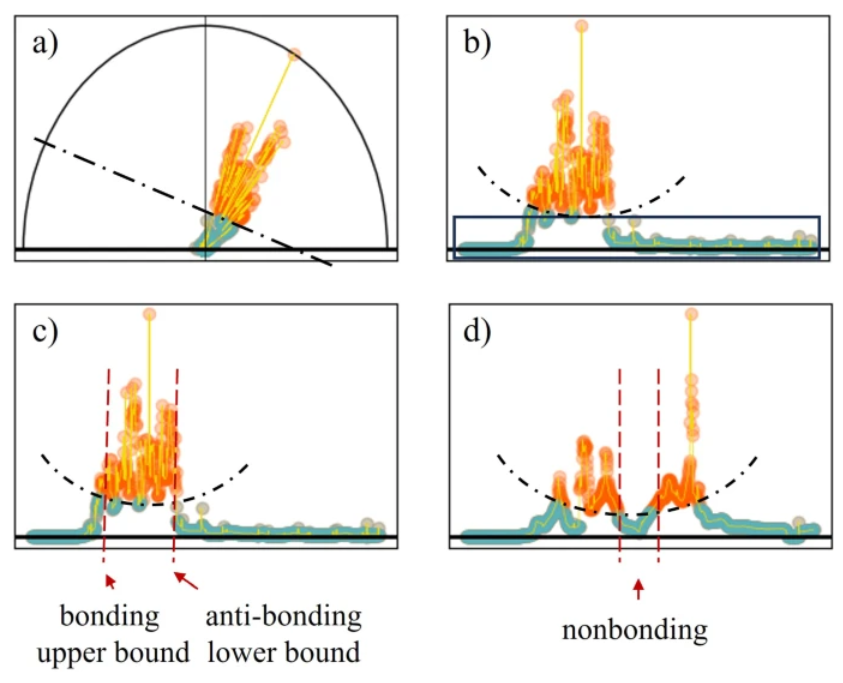
A new mathematical framework predicts how solid materials adsorb to surfaces, using five quantum-based indicators of their constituent atoms
Many areas of research are challenged by the need to explain the properties of materials based on the quantum behaviour of their atoms. One particularly difficult effect to describe is the adsorption of solid materials onto other solid surfaces. Currently, this is often approached using band-based models, which consider groups of electron energy level, or ‘bands’, in the atoms that make up a material. However, these models have limited accuracy, especially when trying to connect quantum details with practical outcomes.
In new research published in EPJ B, Yonghui Li and colleagues at Tianjin University, China, introduce a method that more accurately predicts how strongly atoms in a material will adsorb to other surfaces. Their approach is based on a set of five key indicators, offering a more complete picture of how adsorption is controlled by atomic electron bands. This could have wide-ranging applications in areas such as materials design, catalysis, and biological systems.
EPJ H Highlight - Revisiting the failure of Germany’s wartime nuclear program
- Details
- Published on 27 June 2025
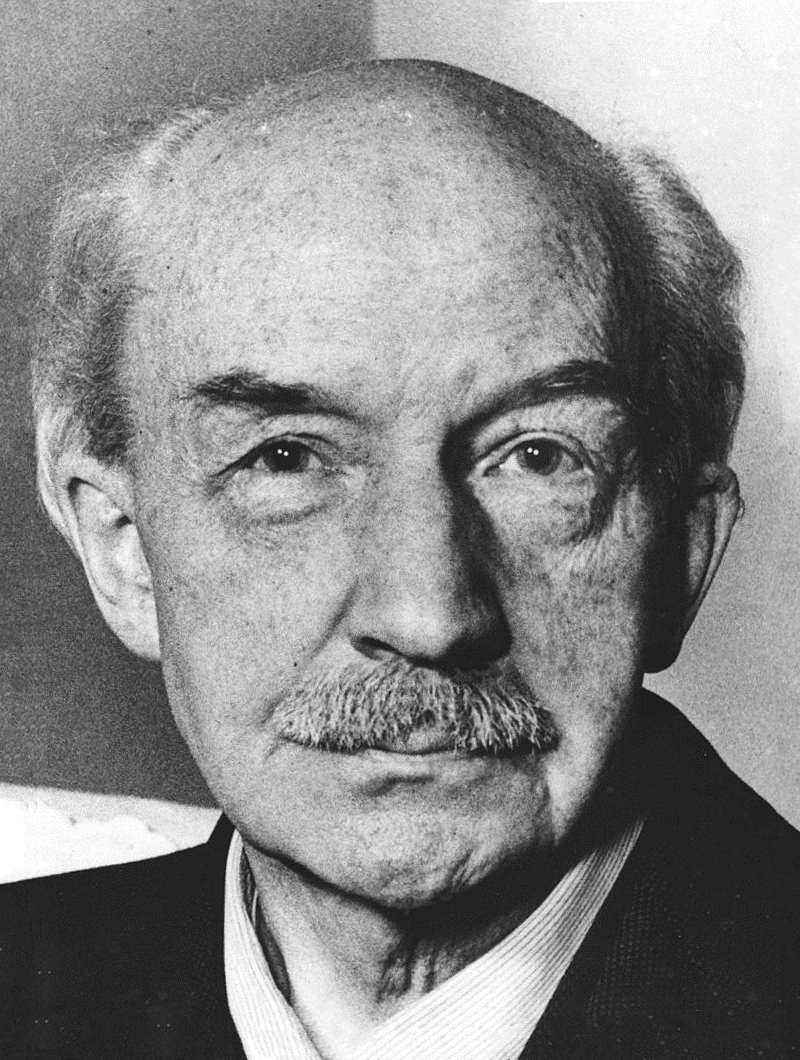
Analysis suggests that the failure of Germany’s nuclear program during World War II was strongly tied to the lack of petroleum coke with which to make high-purity graphite: a material which the more successful American program had in abundance.
During World War II, Germany developed a program dubbed ‘Uranverein’, or ‘Uranium Club’ – which aimed to build a functioning nuclear reactor. But where the parallel American program succeeded, Uranverein ultimately ended in failure: an outcome widely studied by physicists and historians. One particularly pivotal point in this failure was the program’s choice to abandon graphite as a nuclear moderator. Today, it is widely believed that this decision stemmed from erroneous experimental results by a German nuclear physicist, Walter Bothe.
Through an investigation published in EPJ H: Historical Perspectives on Contemporary Physics, researchers led by Patrick Park at Princeton University present an alternative idea: that identically pessimistic tests in January 1941 dissuaded both Walther Bothe in Heidelberg and Enrico Fermi at Columbia from graphite moderation. Instead, graphite moderation was only possible in the US due to the discovery of an exceptionally low-boron petroleum coke feed in Pennsylvania later that year. The team’s findings challenge a long-standing misconception about Germany’s wartime nuclear program and suggest that Bothe likely couldn’t have avoided his erroneous results.
EPJ Plus Focus Point Issue: Laser-driven neutron sources and their applications
- Details
- Published on 23 June 2025
Guest Editors: S. Charisopoulos, M. Roth
Recent advances in high-power laser technology have led to the development of lasers producing extremely short light pulses in the femtosecond range with very high intensities exceeding 1021 Watt/cm2. By guiding these pulses onto a solid foil, intense sources of photons, ions and neutrons can be generated, which can subsequently be used for a wide spectrum of applications, such as non-destructive testing methods in aerospace; radiographic imaging of large objects; in-operando diagnostics of lithium-ion batteries; radiation processing to fabricate smart, functional materials; and active interrogation of sensitive nuclear materials, including nuclear waste characterization. Due to these features, Laser-Driven Neutron and X-ray sources may have a large potential for contributing to socio-economic development.
The present Focus Point on Laser-Driven Neutron Sources and Their Applications is a collection of papers addressing some of the potential applications of laser driven neutron sources as well as some R&D work aiming at optimizing setups and procedures for the production of high-flux neutrons using state-of-the art laser systems.
All articles are available here and are freely accessible until 16 August 2025. For further information, read the Editorial.
EPJ A Topical Collection: Quantum Computing in Low-Energy Nuclear Theory
- Details
- Published on 23 June 2025
Guest Editors: Thomas Ayral, Thomas Duguet, Denis Lacroix, Vittorio Somà
Quantum computing has rapidly evolved from a theoretical concept to an active field of research with real-world prototypes. Major companies and startups are racing to build increasingly powerful quantum devices, and first demonstrations of so-called “quantum advantage” have already taken place. While these machines remain limited by noise and the number of qubits, the emergence of the NISQ (noisy intermediate-scale quantum) era, and the first indications of a transition towards Fault-Tolerant machines are fueling innovations across many disciplines. Nuclear physics, with its complex many-body problems, is one of the most promising areas to benefit from these advances.
This topical collection explores the growing intersection between quantum computing/quantum information and low-energy nuclear physics/related areas. It brings together a set of articles aimed at both introducing scientists to this evolving field and highlighting recent breakthroughs. The focus is on how quantum devices—despite their current limitations—can be used to simulate highly correlated quantum systems such as atomic nuclei. These simulations may in the future eventually tackle problems that are currently beyond the reach of even the most powerful classical supercomputers.
EPJ Plus Highlight - Exploring the experimental potential of electron-hole pair production in graphene
- Details
- Published on 16 June 2025
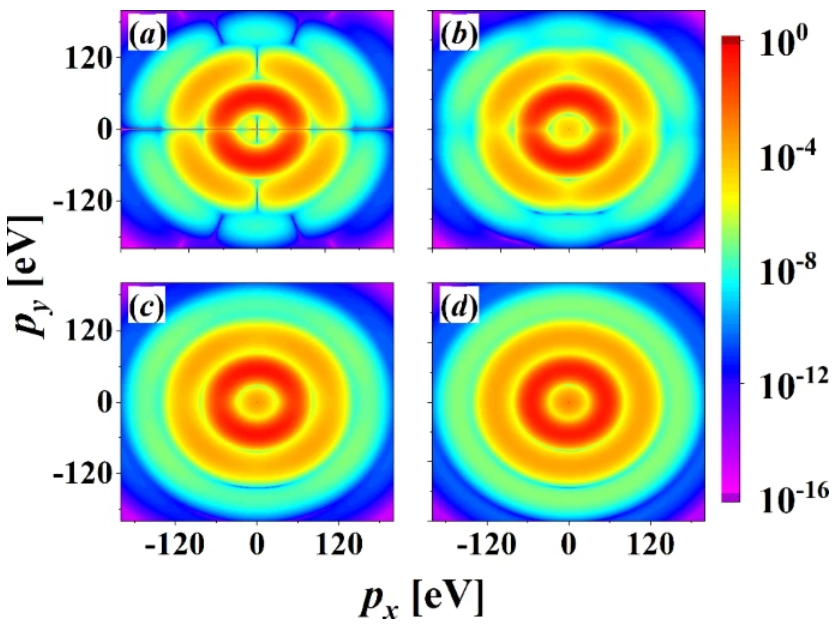
Electron-hole pair production in graphene can mimic many of the key quantum signatures of electron-positron pair production in a vacuum – but with key differences depending on the polarisations of the electric fields applied
Graphene provides a promising platform for exploring exotic quantum phenomena. For example, when an electron in graphene is excited to a higher energy level by an electric field, it leaves behind a positively charged ‘hole – a quasiparticle that essentially behaves like a particle of antimatter. This process is analogous to the production of electron-positron pairs in a vacuum when exposed to strong electromagnetic fields.
Through new research published in EPJ Plus, Zi-Liang Li and colleagues at China University of Mining and Technology provided new insights into how electron-hole pairs form in graphene, when subjected to two polarised electric fields separated by a time delay. Their results show that under the right conditions, graphene can provide a useful platform for precise, controllable, and easily implementable experiments for simulating pair production – offering opportunities to explore quantum effects which would otherwise be extremely difficult to access.
EPJ A Topical Collection: Short-Range Correlations and the EMC Effect
- Details
- Published on 10 June 2025
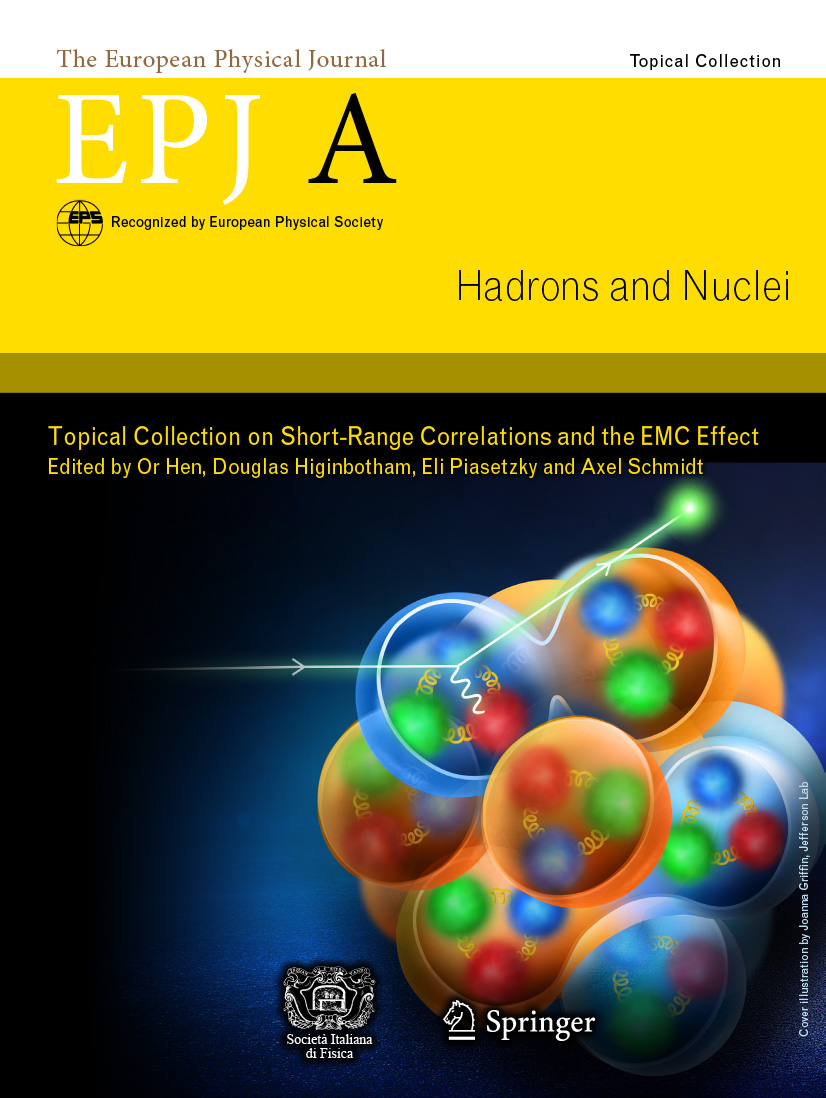
Guest Editors: Or Hen, Douglas Higinbotham, Eliezer Piasetzky, Patrizia Rossi, Axel Schmidt
Short-range correlations (SRCs) between nucleons are to be a universal feature of nuclear structure, seen across the nuclear chart. Correlated nucleons in very close proximity are believed to interact much more strongly with each other than with the rest of the nucleus, leading to a separation of scales. In momentum space, correlated pairs of nucleons have very large relative momenta - larger than the typical nuclear Fermi momentum - while also having a small center-of-mass momentum, i.e., the momentum is balanced within the pair. Because nucleons in SRCs experience a high local nuclear density and tend to have high virtuality, they are an exciting laboratory for learning about dense nuclear matter, the isospin structure of the short-distance nucleon-nucleon interaction, and the role of non-nucleonic degrees of freedom in nuclear structure
EPJ Plus Highlight - A gentle introduction to black hole thermodynamics
- Details
- Published on 23 May 2025
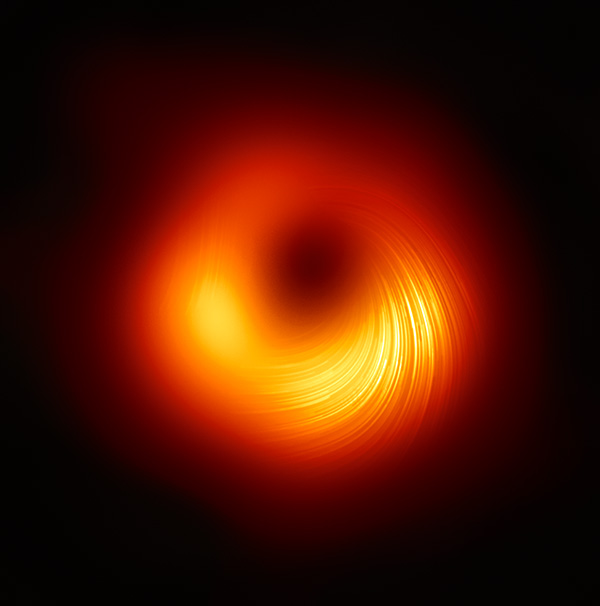
Notes provide a useful introduction to the extensive and deeply complex topic of black hole thermodynamics, offering a valuable starting point for more in-depth research.
Beyond a black hole’s event horizon, the gravitational pull becomes so strong that not even light can escape. As a result, the process of any object being captured by a black hole is `irreversible’. The basic idea of black hole thermodynamics, as developed originally by Bekenstein and Hawking half a century ago, is that this irreversibility is of the same nature as the thermodynamic irreversibility that is familiar in everyday life.