EPJ Plus Focus Point Issue: Accelerator-based Photon Science Strategy, Prospects and Roadmap in Europe
- Details
- Published on 23 July 2025
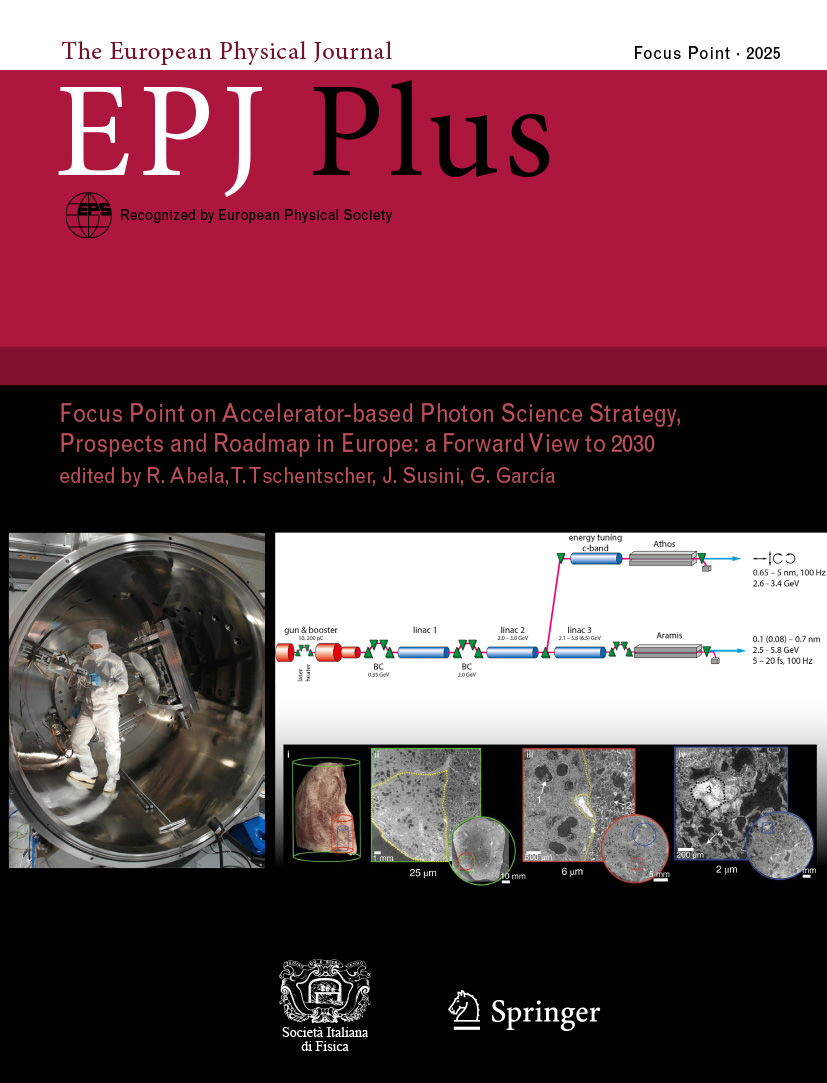
Guest Editors: Rafael Abela, Thomas Tschentscher, Jean Susini, Gastón García
The League of European Accelerator-based Photon Sources (LEAPS) is an alliance of all synchrotron and free electron laser user facilities in Europe. These facilities are an essential element of the scientific landscape in Europe and elsewhere, undergoing fast and profound changes of great relevance for the scientific community and with a substantial societal impact. This focus point issue features the current status and future scientific strategy of LEAPS. The collection includes papers about most of the LEAPS members, along with two specific papers on the LEAPS general strategy and the critical aspect of data.
All articles are available here and are freely accessible until 22 September 2025. For further information, read this highlight.
EPJ Plus Highlight - Hybrid algorithm uncovers robust scar states for quantum computing
- Details
- Published on 14 July 2025
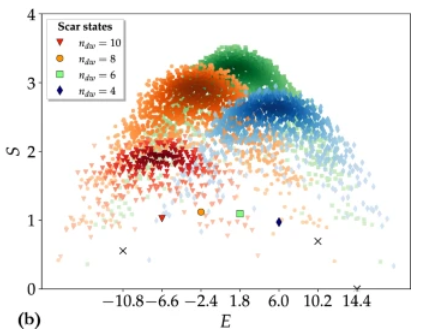
An algorithm that merges classical and quantum computing resources could help reveal robust quantum states hidden within chaotic, noisy systems
Since today’s quantum computing architectures are inherently noisy, they still struggle to generate large amounts of entanglement between qubits. One promising solution could be to target quantum scar states, which can emerge in complex, many-body systems. These states are unusually simple compared with their chaotic surroundings, and they may offer a more robust way to store quantum information – making them especially attractive for building stable quantum logic gates.
Through new research published in EPJ Plus, an international team led by Gabriele Cenedese at the University of Insubria, Italy, demonstrates how the limited entanglement in noisy quantum computers could be transformed into an advantage, making it easier to identify scar states within chaotic quantum systems. Involving a specialised hybrid algorithm, the team’s approach could help pave the way toward more scalable quantum architectures – reducing the need for complex and costly error-correction techniques.
EPJ Plus Focus Point Issue: Laser-driven neutron sources and their applications
- Details
- Published on 23 June 2025
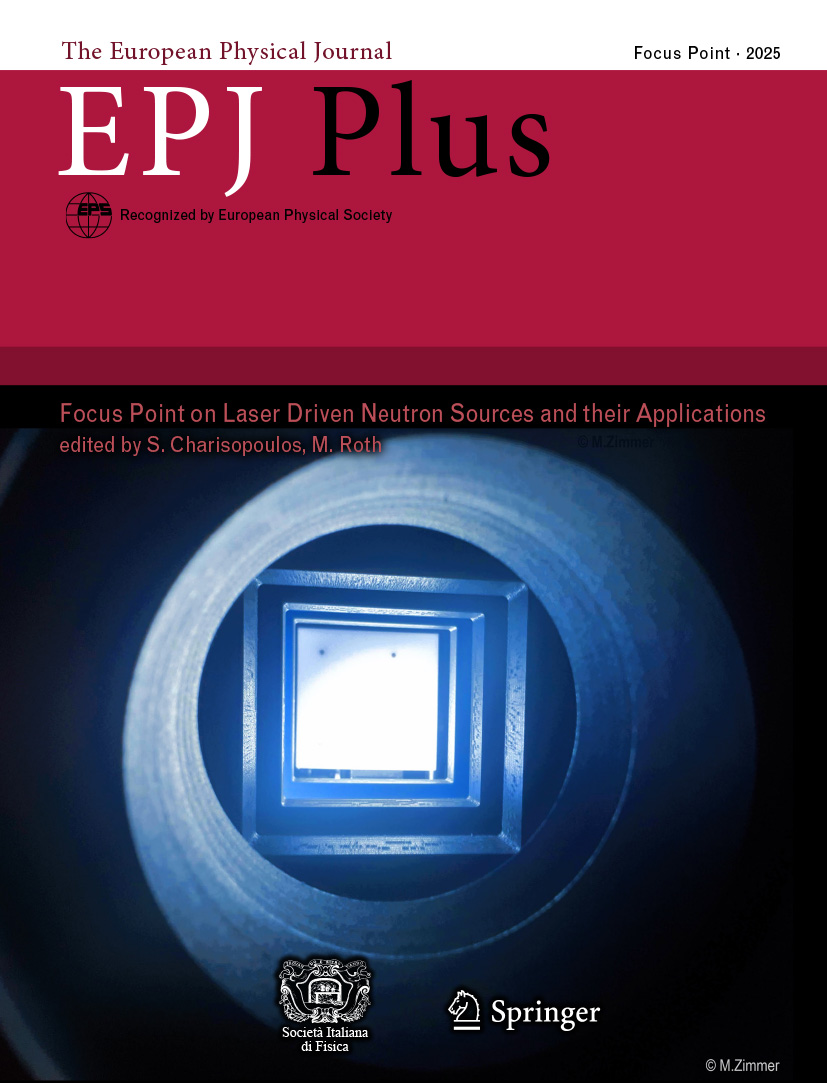
Guest Editors: S. Charisopoulos, M. Roth
Recent advances in high-power laser technology have led to the development of lasers producing extremely short light pulses in the femtosecond range with very high intensities exceeding 1021 Watt/cm2. By guiding these pulses onto a solid foil, intense sources of photons, ions and neutrons can be generated, which can subsequently be used for a wide spectrum of applications, such as non-destructive testing methods in aerospace; radiographic imaging of large objects; in-operando diagnostics of lithium-ion batteries; radiation processing to fabricate smart, functional materials; and active interrogation of sensitive nuclear materials, including nuclear waste characterization. Due to these features, Laser-Driven Neutron and X-ray sources may have a large potential for contributing to socio-economic development.
The present Focus Point on Laser-Driven Neutron Sources and Their Applications is a collection of papers addressing some of the potential applications of laser driven neutron sources as well as some R&D work aiming at optimizing setups and procedures for the production of high-flux neutrons using state-of-the art laser systems.
All articles are available here and are freely accessible until 16 August 2025. For further information, read the Editorial.
EPJ Plus Highlight - Exploring the experimental potential of electron-hole pair production in graphene
- Details
- Published on 16 June 2025
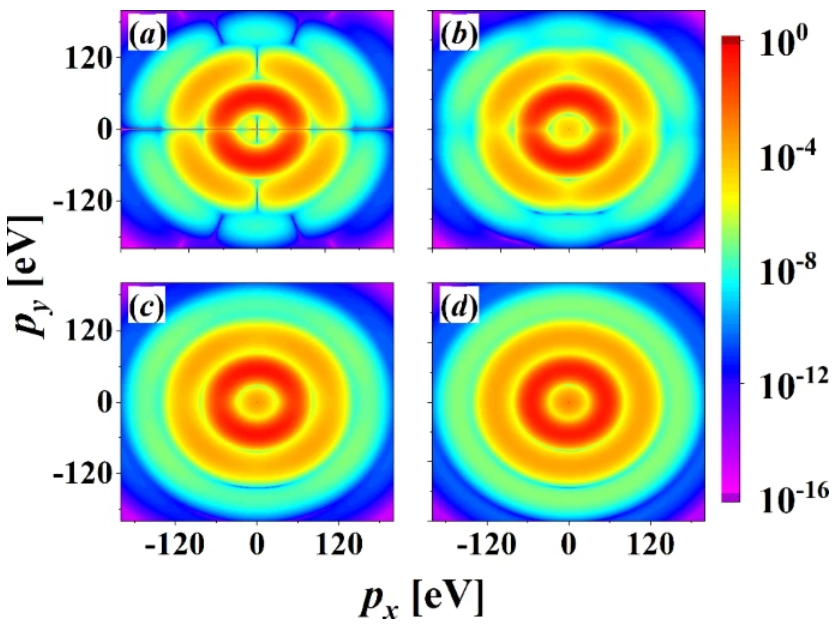
Electron-hole pair production in graphene can mimic many of the key quantum signatures of electron-positron pair production in a vacuum – but with key differences depending on the polarisations of the electric fields applied
Graphene provides a promising platform for exploring exotic quantum phenomena. For example, when an electron in graphene is excited to a higher energy level by an electric field, it leaves behind a positively charged ‘hole – a quasiparticle that essentially behaves like a particle of antimatter. This process is analogous to the production of electron-positron pairs in a vacuum when exposed to strong electromagnetic fields.
Through new research published in EPJ Plus, Zi-Liang Li and colleagues at China University of Mining and Technology provided new insights into how electron-hole pairs form in graphene, when subjected to two polarised electric fields separated by a time delay. Their results show that under the right conditions, graphene can provide a useful platform for precise, controllable, and easily implementable experiments for simulating pair production – offering opportunities to explore quantum effects which would otherwise be extremely difficult to access.
EPJ Plus Highlight - A gentle introduction to black hole thermodynamics
- Details
- Published on 23 May 2025
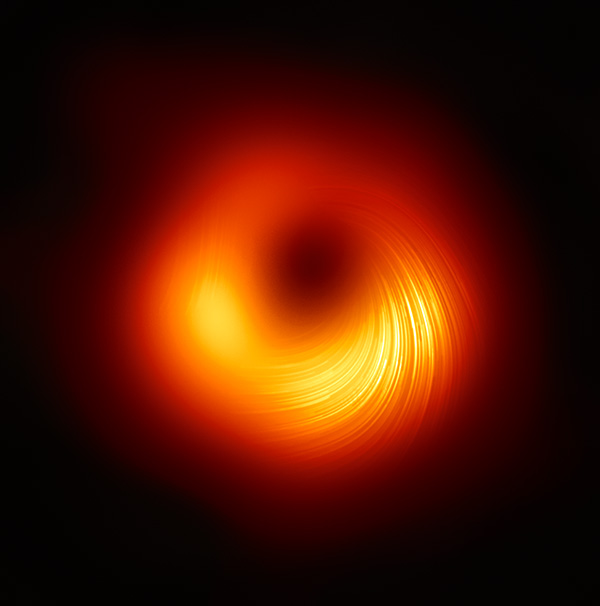
Notes provide a useful introduction to the extensive and deeply complex topic of black hole thermodynamics, offering a valuable starting point for more in-depth research.
Beyond a black hole’s event horizon, the gravitational pull becomes so strong that not even light can escape. As a result, the process of any object being captured by a black hole is `irreversible’. The basic idea of black hole thermodynamics, as developed originally by Bekenstein and Hawking half a century ago, is that this irreversibility is of the same nature as the thermodynamic irreversibility that is familiar in everyday life.
EPJ Plus Highlight - Quantum refrigerators explored with a new theoretical framework
- Details
- Published on 23 May 2025
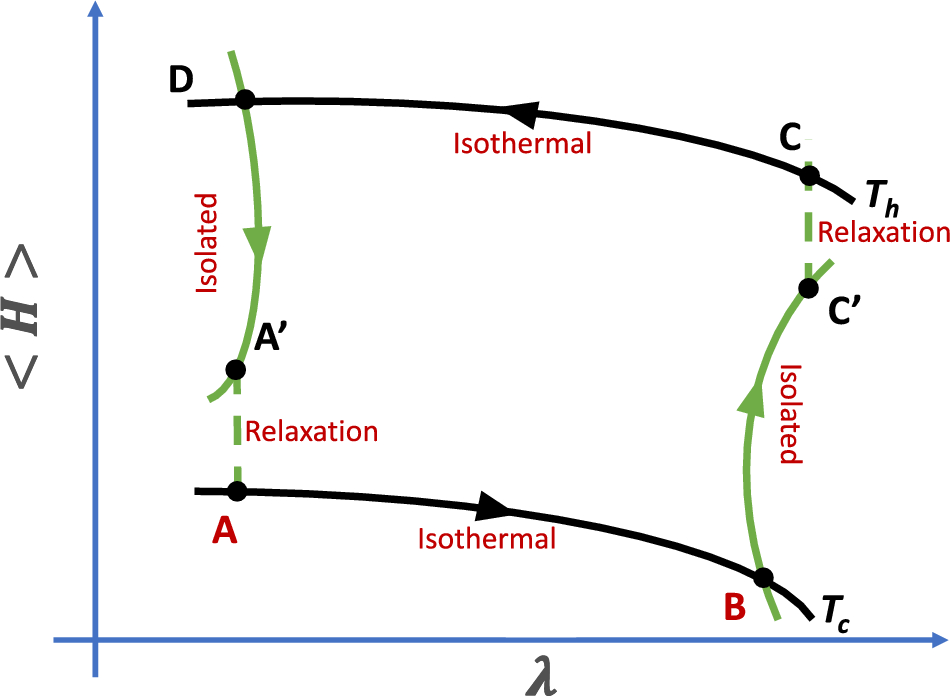
New research takes the Carnot cycle to the realm of quantum physics to explore an ideal refrigeration system
A Carnot refrigerator is a theoretical ideal model of a cooling system that operates in the most efficient way possible. Based on the principles of thermodynamics and the Carnot cycle first theorised by French physicist Sadi Carnot in 1824, Carnot refrigeration has enthralled scientists for over 200 years, even when not directly implemented, providing inspiration for “real-life” cooling systems like fridges and air-conditioners.
A new paper published in the journal the EPJ Plus by Bolu Abant Izzet Baysal University physicist Ferdi Altintas offers a framework for designing quantum refrigerators, relevant for cooling in quantum technologies like quantum computing.
EPJ Plus Highlight - Understanding explosive transitions in propagating flames
- Details
- Published on 19 May 2025
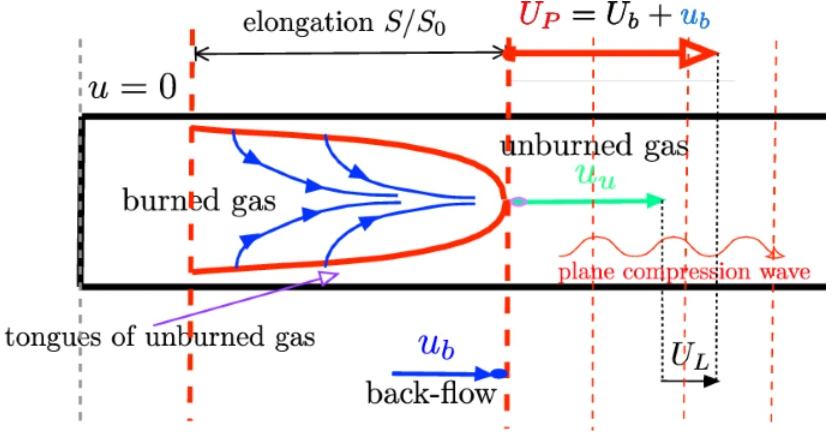
Mathematical analysis sheds new light on the mechanisms which unfold as propagating flames transition from one type of combustion to another
As a flame propagates through a mixture of air and flammable fuel, it can suddenly transition from one type of combustion to another. While it initially spreads at subsonic speeds through a process named ‘deflagration’, the flame will suddenly switch to a supersonic motion, driving a shockwave which compresses and ignites the fuel directly in front of it: a process named ‘detonation’. To date, however, some details of the mechanisms which unfold as this transition takes place are still being investigated.
EPJ Plus Highlight - Unexpected Instability in a Rapid Cycling Synchrotron
- Details
- Published on 15 April 2025
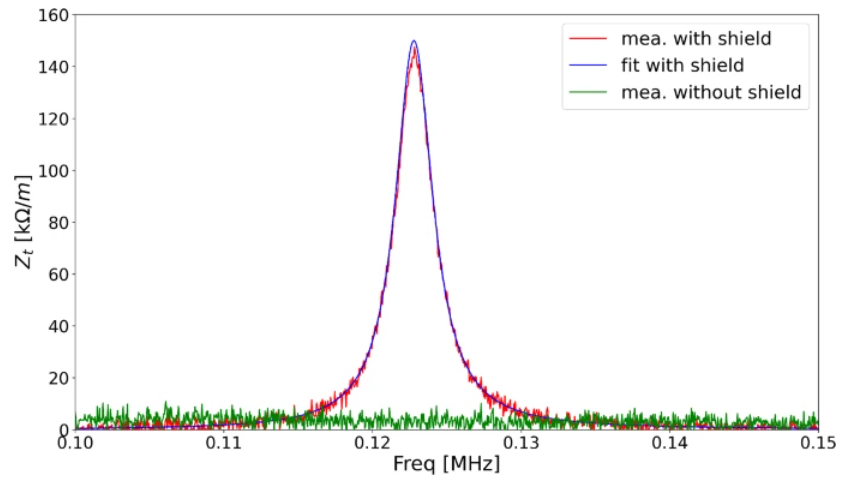
Researchers at the Chinese Academy of Sciences in Beijing have shown that simplified models of radio-frequency shielding in the CSNS synchrotron had missed the narrow-band impedance that led to loss of power in the beam.
The China Spallation Neutron Source (CSNS), located in Guangdong, China, includes a linear accelerator, a rapid cycling synchrotron, two beamlines and a target that provide high-energy neutron, proton and muon beams for a wide variety of applications. As the power of the beams increased, scientists observed that an unexpected instability in the impedance at the synchrotron led to substantial beam loss. A group of physicists based at the Institute of High Energy Physics, Chinese Academy of Sciences, Beijing and at the synchrotron, and led by Professor Sheng Wang, have tracked down the source of the instability and discovered how to mitigate it. This work has now been published in EPJ Plus.
EPJ Plus Focus Point Issue: The Magic of Glass
- Details
- Published on 11 April 2025
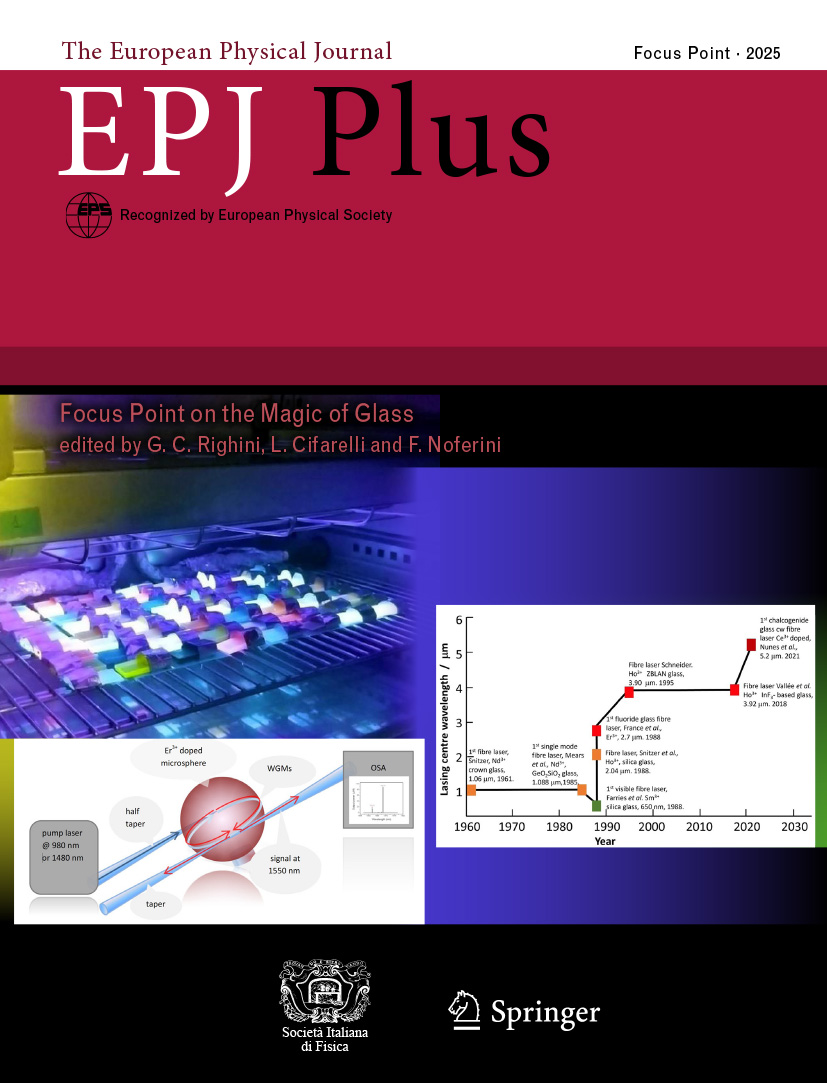
Guest Editors: Giancarlo C. Righini, Luisa Cifarelli & Francesco Noferini
Glass is a magical material, one that offers a unique flexibility of design regarding its composition, which in turn allows its optical, mechanical, thermal and electrical properties to be tailored. Thanks to these qualities, it has not only made substantial contributions to the advancement of science (from astronomy and microscopy to modern photonics) but also offers artists an exceptional medium that can be creatively modelled and shaped. This Focus Point explores various aspects of glass science and technology, with contributions addressing: sustainability in industrial glass manufacture; a Raman study on the structure of volcanic glasses; glass artefact conservation; glass for photonics; medium infrared fibre lasers; a whispering gallery modes microlaser; optical and spectroscopic characterization of rare-earth-doped glasses and bioglasses; and glass for particle physics detectors. Though by no means exhaustive, the aim of this Focus Point is to give readers an idea of the various and varied areas of physics and chemistry where glass is an indispensable material.
The articles included in this Focus Point Issue are available here and are freely accessible until 10 June 2025. For further information read the Editorial.
EPJ Plus Focus Point Issue: Nonlinear optical systems and applications
- Details
- Published on 19 February 2025
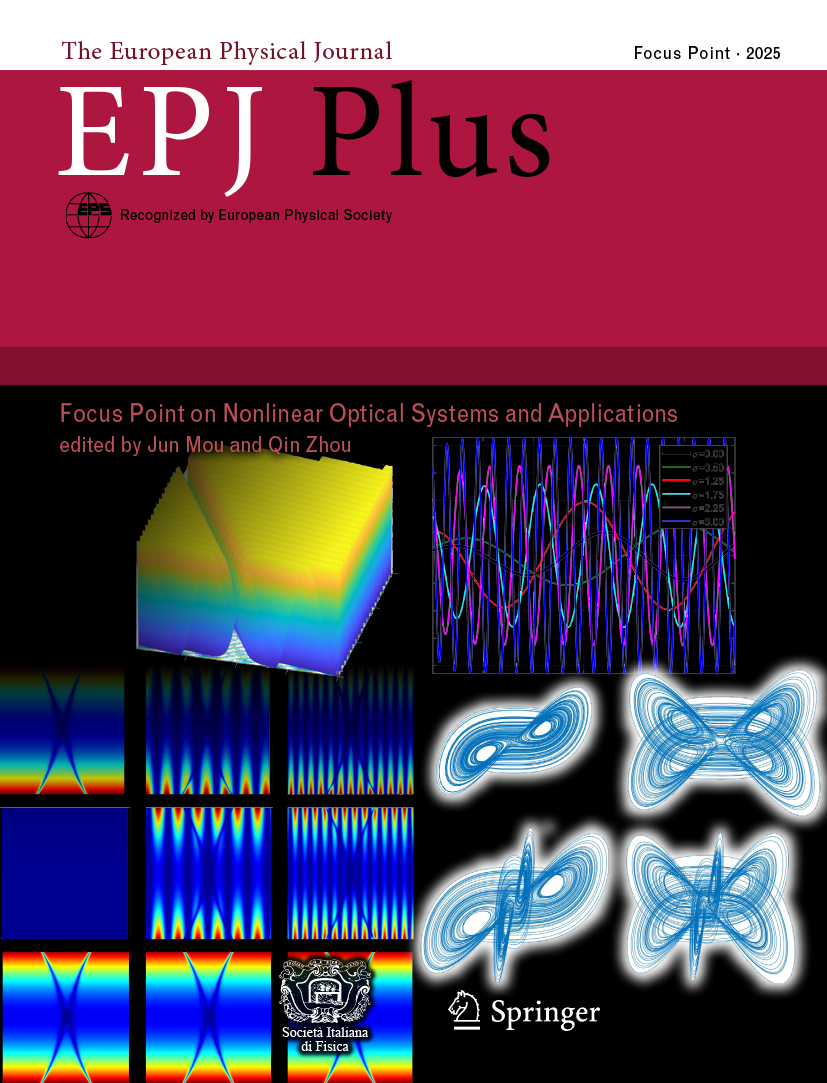
Guest Editors: J. Mou and Q. Zhou
Nonlinear optical systems have played a key role in modern technology. Innovations in the field of nonlinear optics have driven the development of several applications in efficient optical communications, quantum computing, and precision sensing. In this Focus Point on Nonlinear Optical Systems and Applications, cutting-edge research on nonlinear optical systems is discussed in depth, which not only focuses on the nonlinear dynamical behavior and noise effects in optical fibers but also explores the construction and application of nonlinear optical systems. These studies are crucial to further promote the performance optimization of optical networks. It is worth mentioning that the nonlinear optical system can be used as a pseudorandom number generator, and the complex pseudorandom sequences can be well applied in cryptography. In the future, research on nonlinear optics is expected to realize more stable optical communication and further increase the communication speed.
The articles included in the Topical Collection are available here and are freely accessible until 31 March 2025. For further information read the Editorial.